This article explains how much water pregnant women need each day, why hydration matters more during pregnancy, and how needs shift across trimesters. It covers dehydration warning signs, practical hydration strategies, and when to seek medical care.
You already know water is good for you. But pregnancy changes the equation. Your blood volume grows by roughly a third, amniotic fluid renews itself all day, and your kidneys are working harder than ever. Suddenly, the question “Am I drinking enough?” carries more weight.
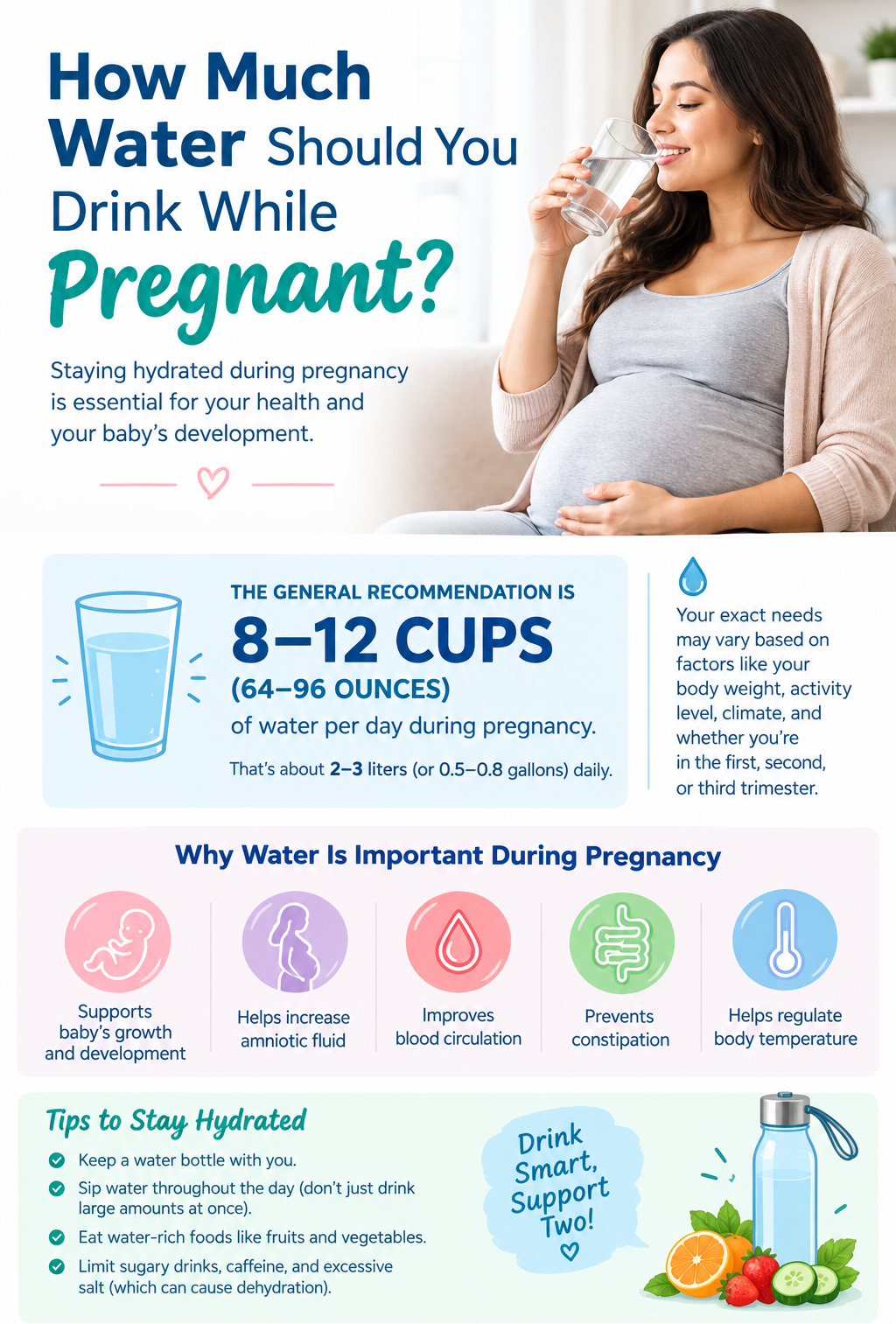
The short answer: most pregnant women need 8 to 12 cups (64 to 96 ounces) of water daily. But your actual needs shift depending on your trimester, activity level, the weather, and how your body handles pregnancy symptoms like nausea or heartburn. This guide breaks down what the research says, what your body is telling you, and how to hit your hydration target without feeling like you’re drowning.
Why Hydration Matters More During Pregnancy
Water isn’t just a comfort during pregnancy. It’s doing active work.
Your body uses water to build amniotic fluid, the protective cushion surrounding your baby. It carries nutrients through your bloodstream and helps waste leave your body. Water also keeps your digestion moving, which matters when pregnancy hormones slow everything down and constipation becomes a daily frustration.
There’s a urinary tract angle too. Staying well hydrated keeps urine diluted, which reduces your risk of UTIs and bladder infections—both more common during pregnancy. And in the third trimester, dehydration can trigger uterine cramping and contractions, which is the last thing you want before your due date.
The Daily Target: 8 to 12 Cups
The American College of Obstetricians and Gynecologists recommends 8 to 12 cups (64 to 96 ounces) of water every day during pregnancy. That’s roughly 2 to 3 liters.
A simple way to visualize it: about ten 8-ounce glasses.
But this isn’t a rigid prescription. Some days you’ll need more. Some days, especially if nausea makes drinking difficult, you’ll struggle to hit the minimum. The goal is to stay in the range most days and adjust based on what your body is telling you.
How Your Needs Shift by Trimester
Your fluid needs aren’t static. They creep upward as your pregnancy progresses.
| Trimester | Approximate Daily Intake |
|---|---|
| First trimester | ~2.5 liters (10–12 glasses) |
| Second trimester | ~3 liters (12–14 glasses) |
| Third trimester | 3+ liters (up to 15 glasses) |
Source: Clinical hydration guidance for pregnancy.
In the first trimester, morning sickness can make hydration a battle. Small, frequent sips often work better than trying to drink a full glass at once. Cold liquids, ice chips, and frozen fruit juice pops can help when plain water feels impossible to keep down.
By the third trimester, your calorie needs have increased, and with them, your water needs. The Institute of Medicine recommends adding roughly 1 to 1.5 mL of water for every extra calorie consumed. That translates to a few extra glasses daily compared to early pregnancy.
Signs You’re Not Drinking Enough
Your body gives clear signals when it’s running low. Pay attention to these clusters of symptoms rather than waiting for extreme thirst.
Early warning signs:
- Dark yellow urine or urinating less often than usual
- Dry mouth or sticky saliva
- Headache that improves after drinking water
- Fatigue that feels heavier than normal pregnancy tiredness
- Constipation that’s getting worse over days
Source: Clinical dehydration assessment guidelines.
Signs that need a same-day call to your provider:
- Very little urine for 8–10 hours
- Persistent dizziness or fainting
- Fever with burning urination
- Reduced fetal movements, especially after 28 weeks
- Painful contractions that don’t settle with rest and fluids
Source: Urgent dehydration warning signs.
Urine color is your fastest self-check. Pale straw means you’re on track. Dark amber or strong-smelling urine means you need to drink more, starting now.
What Counts as Fluid (And What to Limit)
Water is your base. But you don’t have to drink plain water exclusively to stay hydrated.
Good options that count toward your total:
- Milk and fortified plant milks, which add calcium and protein
- Soups, broths, and thin buttermilk
- Coconut water, which provides natural electrolytes like potassium and magnesium—useful if you’ve been vomiting or sweating heavily
- Caffeine-free herbal teas
What to limit:
- Caffeinated drinks. Tea and coffee do count toward fluids, but keep caffeine under 200 mg per day—roughly one 12-ounce cup of coffee. Too much caffeine can affect your baby’s growth and sleep patterns.
- Sugary sodas and juices. They spike blood sugar without helping hydration much.
- Energy drinks and alcohol. Neither is safe during pregnancy.
Practical Strategies for Hitting Your Target
Knowing you need 8 to 12 cups is one thing. Actually drinking that much while managing nausea, heartburn, and a bladder that already feels like it’s in overdrive is another.
Here’s what works.
Pace it through the day. Gulping large amounts at once can make you feel bloated and nauseated. Spread your intake across waking hours. A simple routine: one glass on waking, one with breakfast, one mid-morning, one to two with lunch, one mid-afternoon, one with dinner. Small sips after dinner if you’re still thirsty.
Drink between meals, not with them. If you’re prone to nausea or feel too full after eating, sipping between meals rather than during them can help.
Make water more appealing. A slice of lemon, lime, or cucumber can make plain water easier to drink. Cold water often goes down easier than room temperature, especially if you’re nauseous.
Use food as a hydration backup. Watermelon, cucumbers, oranges, grapes, and lettuce all have high water content. They won’t replace drinking, but they contribute.
Keep a bottle visible. Out of sight is out of mind. A water bottle on your desk, in your bag, or on the counter is a constant visual reminder.
Set reminders if you forget. Phone alarms or a water-tracking app can help if you’re someone who gets absorbed in tasks and realizes at 4 PM that you’ve had one cup of tea all day.
When to Call Your Provider
Most hydration questions can be managed at home. But some situations need medical attention.
Call your provider the same day if you:
- Can’t keep fluids down for more than a few hours due to vomiting
- Have diarrhea that lasts more than 24 hours
- Notice your urine has been very dark or you’ve barely urinated for most of the day
- Feel dizzy when standing or have palpitations at rest
- Notice fewer baby movements than usual
If you’re losing fluids through vomiting or diarrhea, plain water alone may not be enough. You’re losing electrolytes too, and replacing only water can leave you feeling weak and headachy. Oral rehydration solutions (ORS) are designed to replace both water and salts. Ask your pharmacist or provider which brand is appropriate during pregnancy.
A note on drinking too much water
Water intoxication (hyponatremia) is rare but possible. It happens when sodium levels drop dangerously low from drinking excessive amounts in a short period. For most pregnant women drinking 2 to 3 liters spread across a day, this isn’t a concern. But if you’re chugging large volumes quickly—especially during labor—it can become a medical issue. Stick to steady pacing, and follow your care team’s guidance if you’re in the hospital.
8. Conclusion
Your body is doing extraordinary work right now. Water is one of the simplest tools you have to support it. Aim for 8 to 12 cups daily, adjust upward as your pregnancy progresses and conditions demand it, and use urine color as your daily check-in. When nausea or other symptoms make drinking hard, small sips, cold liquids, and electrolyte-containing options can help you stay on track.
If you’re ever unsure whether you’re hydrated enough—or if something feels off—call your provider. Trusting your instincts is part of good prenatal care.
9. FAQ Section
How do I know if I’m dehydrated during pregnancy?
The earliest signs are dark yellow urine, dry mouth, and feeling thirsty. As dehydration progresses, you may notice headaches, dizziness, constipation, and urinating less often. If you can’t keep fluids down or have very little urine for 8–10 hours, call your provider.
Does drinking more water help with pregnancy swelling?
It seems counterintuitive, but staying hydrated actually helps your body maintain proper fluid balance. Dehydration can cause your body to hold onto water, which can worsen swelling. Drinking enough supports circulation and kidney function.
Can I drink too much water while pregnant?
It’s rare, but yes. Drinking large volumes in a short time can dilute sodium levels dangerously. For most women, 2–3 liters spread throughout the day is safe. The risk increases with rapid, excessive intake, not steady hydration.
What should I drink if I have morning sickness and can’t keep water down?
Try cold liquids, ice chips, or frozen fruit juice pops. Sip small amounts every 15 minutes rather than trying to drink a full glass. Ginger tea or peppermint tea may also help settle nausea. If you can’t keep anything down for several hours, contact your provider.
Does coconut water count toward my daily water intake?
Yes. Coconut water is hydrating and provides electrolytes like potassium and magnesium. It’s a good option if you’ve been sweating heavily or recovering from vomiting. But it shouldn’t replace all your water—plain water remains the best base.
10. CTA
Struggling to hit your hydration goals? Download our free Pregnancy Hydration Tracker to build a daily routine that works with your symptoms, not against them.